
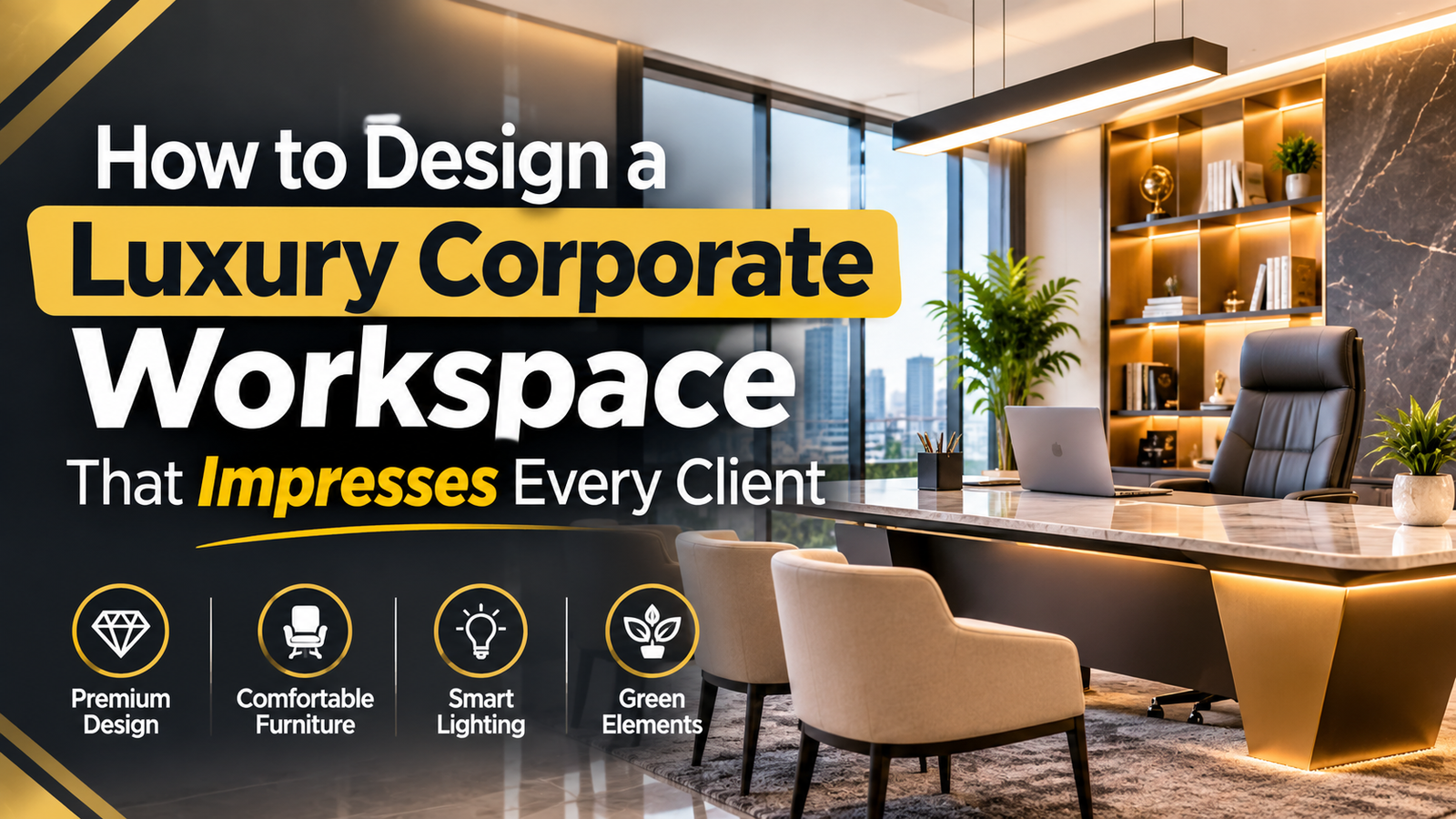
How to Design a Luxury Corporate Workspace That Impresses Every Client
A client walks into your office for the first time. Before anyone has said a word, they’ve already formed an opinion. The reception, the way light falls on the meeting table, the chair they’re offered: each one quietly answers a single question. Do these people take their work seriously?
That’s why a luxury corporate workspace isn’t really about gold fixtures or a marble lobby. It’s about making a visitor feel that every detail was thought through. You don’t need an unlimited budget to get there. You need a clear plan, a few smart priorities, and the discipline to skip things that look expensive but feel cheap.
Here’s how we’d approach it, step by step.
Start With Who Walks Through the Door
Before you pick a single piece of furniture, decide who you’re designing for. A law firm hosting anxious clients needs a different mood from a design studio pitching to a marketing head. A manufacturer welcoming overseas buyers wants to signal reliability and scale.
Try this: write down three words you’d like clients to use when they describe your office afterwards. “Calm, confident, established” leads to very different choices than “bold, creative, modern”. Every later decision, from wall colour to table shape, gets easier once you test it against those words.
Then walk the visitor’s route yourself, from the entrance to reception, the waiting area and the meeting room. Most offices lose their polish somewhere along that path, and it’s usually the waiting area, which tends to be treated as leftover space.
Reception: You Get About Ten Seconds
First impressions form fast, and reception is where they form. Keep it uncluttered. One strong feature is enough: a textured wall, a well-lit logo, a single good piece of art. Skip the brochure pile and the plastic plants.
Seating matters more than most people expect. A guest may wait ten minutes, and a low, stiff, sagging seat quietly undoes all your good work. Look for firm support, a seat height that’s easy to get out of, and upholstery that holds its shape. If you’re shortlisting, it helps to compare a few reception sofa options in person rather than from photos, because fabric and foam feel very different from how they look on screen.
Add a small side table for a cup of coffee, and make sure there’s somewhere to put a bag or coat. Warm, indirect lighting beats harsh tube lights every time.
Materials and Colour: Restraint Wins
A luxury corporate workspace usually reads as restrained rather than loud. Stick to a tight palette: two neutrals and one accent. Charcoal, warm grey, deep navy and walnut, with a touch of brass, work in most light conditions and age well.
Spend on the surfaces people actually touch. Leather armrests, solid wood table edges, good upholstery and a quality door handle say more than an expensive ceiling nobody looks at. Where hands never go, you can economise without anyone noticing.
The most common mistake we see is too many finishes. Glossy laminate beside matte wood beside glass beside chrome looks busy, not rich. Pick two or three materials and repeat them.
One practical point for Delhi and the NCR: dust is real. A pale fabric that stains within a month stops looking luxurious very quickly, so choose finishes that clean easily and ask how they should be maintained.
Spend Where Clients Actually Sit
Your meeting room is where clients spend the longest stretch of time, so it deserves the biggest share of attention. Size the table to the room, not the other way around. As a rule of thumb, allow roughly 60 to 70 cm of table edge per person, and about a metre of clearance behind each chair so people can move without bumping the wall.
Then comes the chair, which is the clearest signal of quality in the whole room. A guest who has to keep shifting after twenty minutes will remember the discomfort, not your presentation. Good executive seating has adjustable seat height, proper lumbar support, adjustable tilt tension and armrests that don’t dig in. If you want a primer on what to look for, our guide to executive office chairs walks through the details, and the broader guide to luxury chairs for professionals covers materials and build.
Ask about durability testing too. BIFMA standards are a widely recognised benchmark for the safety and strength of office seating, and a reputable supplier should be able to tell you what their chairs have been tested against. And please sit in the chair for at least ten minutes before buying. If you’re in Delhi, you can look at a range of office chairs in Delhi and test them properly instead of trusting a catalogue.
Light, Sound and Air
Layer your lighting. Use ambient light for the overall feel, task light where people read or write, and a little accent light to pick out art or a feature wall. Most offices work well at around 300 to 500 lux at desk height, which is a common workplace guideline. Bring in natural light where you can, and use sheer blinds so video calls don’t suffer from glare.
Sound is the quiet factor. Hard floors, glass walls and bare ceilings make a room echo, and a client who can’t hear clearly, or who overhears the next meeting, doesn’t feel looked after. Rugs, upholstered chairs, fabric panels and proper doors on meeting rooms fix most of it.
And check the air. A stuffy room undoes everything else. Good ventilation, steady temperature and a few real plants go a long way. Keep any fragrance very light, or skip it.
Design for Your Team Too
The best luxury corporate workspace is one your own people also enjoy using. If staff are uncomfortable, they slump, desks fill up with clutter, and the polish fades within months. Comfortable seating and sensible ergonomics are repeatedly linked to better focus and fewer complaints, and we’ve covered how premium furniture supports employee productivity if you want the longer argument.
Give people proper storage and clean cable management. Visible mess reads as disorder, and clients notice it even when they don’t say so.
Small Details Clients Notice
Clients rarely mention these, but they notice them:
- A clear table before every meeting, with fresh water and clean glasses
- Washrooms that match the standard of the rest of the office. Guests always see them, and they’re often forgotten
- Signage that’s easy to read and branding that’s confident, not shouty
- A tidy, quiet waiting area with something decent to read or look at
- Staff who know where to point a visitor
The last one isn’t furniture at all, but it matters as much as anything you buy.
Plan the Budget Honestly
If money is limited, put it in this order: seating and the meeting table first, lighting second, the reception feature third. Save on things clients never see, like back-office storage.
Buy fewer, better pieces rather than filling every corner. A smaller room furnished well looks more expensive than a larger one furnished carelessly. Our guide to buying premium office furniture covers how to judge quality against price.
Before you pay, ask three questions. What does the warranty cover, and are the mechanism, foam and fabric covered separately? Who handles after-sales service? And can you order matching pieces later when the team grows? A beautiful set that can’t be extended becomes a headache in two years.
A Quick Checklist Before You Finish
- Three guiding words chosen and agreed
- Reception uncluttered, with comfortable seating
- Two neutrals and one accent colour
- Meeting chairs tested by sitting in them for ten minutes
- Layered lighting, with glare under control
- Echo reduced with soft surfaces
- Warranty and service terms confirmed in writing
Final Thoughts
A luxury corporate workspace doesn’t announce itself. Clients feel it in the quiet room, the comfortable chair, the calm reception, and the sense that nobody had to rush to prepare for their visit. Start with your three words, spend where people sit, keep the palette tight, and be honest about what you can maintain.
If you’d like to see and test seating before you decide, the Seat King team is happy to help you shortlist. Get in touch and we’ll talk through your space.
- 7 Features to Look for Before Choosing an Ergonomic Chair for Your Workspace October 30, 2026
- How to Select the Right Furniture for Different Office Departments October 15, 2026
- How to Design a Luxury Corporate Workspace That Impresses Every Client October 9, 2026
- Best Office Chairs in Delhi for Long Working Hours September 29, 2026
- Buy Office Furniture in Delhi: Essential Tips for Businesses September 18, 2026

Seatking is one of India’s leading office furniture companies, catering to diverse sectors such as government enterprises, public sector units, banks, corporate offices, and institutions.
COPYRIGHT 2025 © SEATKING. ALL RIGHTS RESERVED.