
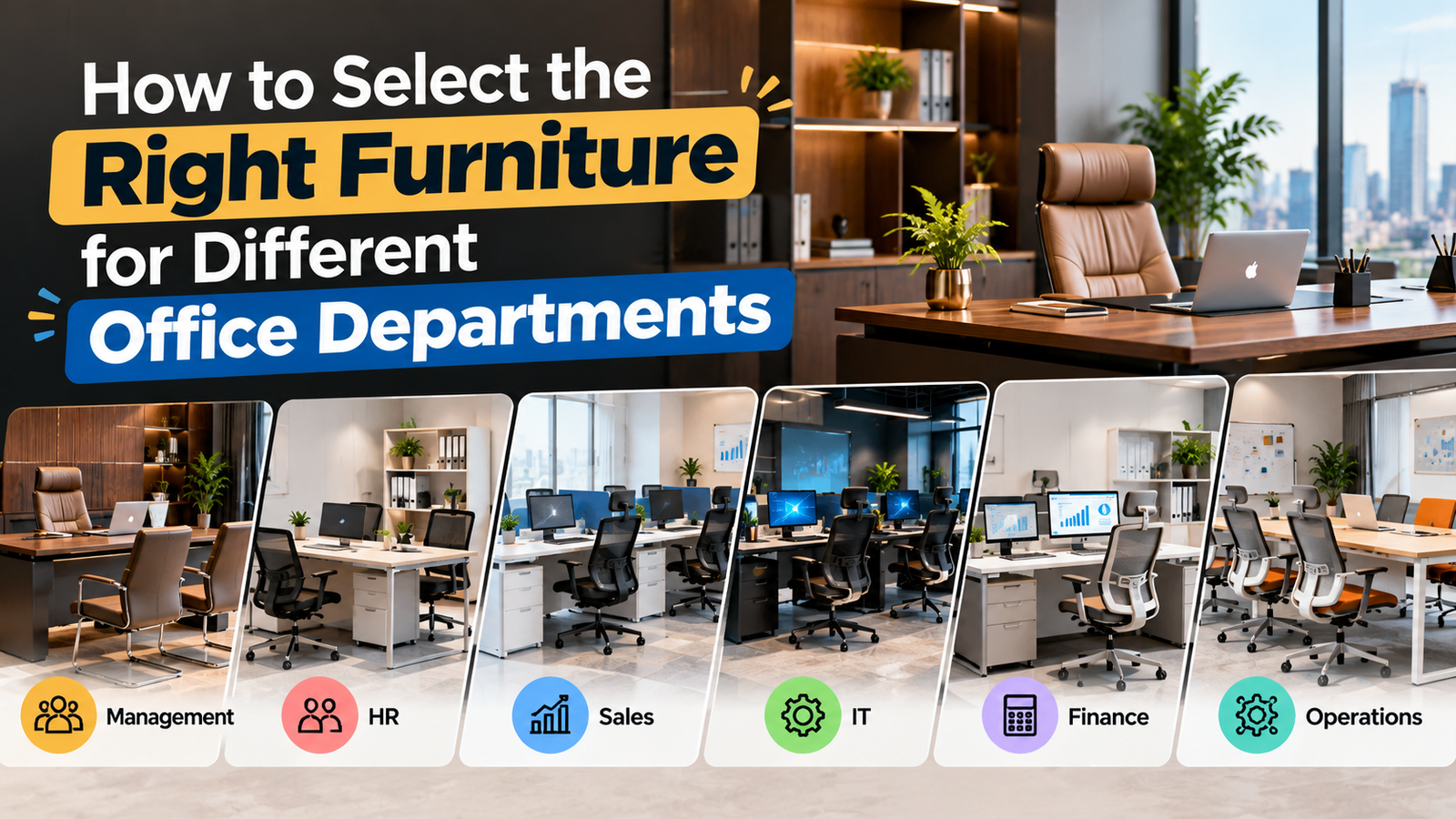
How to Select the Right Furniture for Different Office Departments
Walk through most offices and you’ll spot the same mistake. Every department gets the same desk, the same chair and the same storage unit, bought in one bulk order because it was easier to approve. It looks tidy for a few months. Then the accounts team starts complaining about backaches, the sales floor is too noisy to think, and the director’s cabin feels like it belongs to a different company.
People in different teams don’t work the same way, so they can’t be furnished the same way. Choosing office furniture for different departments isn’t about spending more. It’s about matching each piece to what the person sitting there actually does for eight or nine hours a day.
Here’s a practical way to think it through, team by team.
Start by Watching How Each Team Works
Planning office furniture for different departments starts before you open a catalogue: spend a day observing. How long do people sit without getting up? Do they take calls, handle paper, meet visitors, or stare at two screens? Do they work alone or in small huddles? A finance analyst who spends six hours on spreadsheets has very different needs from a sales executive who is on the phone half the day.
Make a simple sheet with one row per department: hours seated, main tasks, privacy needs, storage needs, and whether the team is likely to grow. It takes an hour, and it saves you from expensive returns later. It also gives you something concrete to show whoever approves the budget.
Reception and Front Desk
This is the first thing anyone sees, so it carries your brand. The desk should sit at a comfortable height for the receptionist, with a raised counter on the visitor side so loose papers and bags stay out of sight. Choose a chair with good lumbar support and a smooth swivel base, because receptionists turn all day.
For guests, pick sturdy seating that’s easy to get in and out of, with a small side table close by. If the waiting area has space, a couple of lounge chairs feel more welcoming than a row of identical seats along the wall.
Management and Executive Cabins
Leadership rooms do two jobs. They’re a working space, and they’re where appraisals, negotiations and difficult conversations happen. A large desk with a proper return, closed storage behind it and a visitor seating arrangement on the other side usually works well.
The chair matters most here. A high-back chair with adjustable lumbar support, tilt lock and armrests is worth the money for someone who sits in it for long stretches. Our guide to executive office chairs explains what to check before you buy. Keep the materials in line with reception so the whole office tells one story.
HR and Finance: Privacy and Long Sitting Hours
HR handles sensitive conversations, and finance handles sensitive numbers. Both need lockable storage and some visual privacy. A desk with a modesty panel or a low partition does the job without boxing people in. HR also benefits from a small side table with two guest chairs, so interviews and counselling chats feel less like an interrogation.
Finance teams sit the longest and move the least, especially around month-end and audits. Look for adjustable seat depth, firm cushioning and a mechanism that allows small posture changes through the day. If your team works late often, it’s worth browsing chairs for long hours before you decide.
Sales and Customer Support: Noise and Movement
These floors are loud. Workstations with partitions at around shoulder height help dampen sound without making people feel walled in. Headset users need a chair with a supportive backrest that doesn’t push the head forward, and armrests that can be adjusted or flipped away.
Cable management matters more than you’d think. Chargers, headsets and second screens pile up fast, and loose wires get kicked. Choose chairs with sturdy castors that roll smoothly on both carpet and tiles, because people move between desks more than you’d expect.
IT and Technical Teams
Developers, analysts and designers working on two or three screens need desk space. Aim for 140 to 160 cm of width instead of the standard 120, and consider monitor arms to free up the surface. Height-adjustable desks are worth a look for teams that spend the entire day at a computer.
For chairs, go fully ergonomic: adjustable armrests, seat depth and lumbar support, plus a breathable mesh back if the room runs warm. Leave room under the desk for devices and cables, so the floor doesn’t turn into a tangle.
Creative and Marketing Teams
Creative work swings between quiet focus and noisy brainstorming, so flexibility beats uniformity. Movable tables, a wall that can take pinned work, and a few comfortable seats for informal huddles all help.
Still keep proper task chairs at the main desks. A stylish stool is lovely for ten minutes and miserable for three hours.
Meeting and Conference Rooms
Size the table to the room and the usual headcount. As a rule of thumb, allow roughly 60 to 70 cm of table edge per person, and about a metre of clearance behind each chair. Chairs with arms and a medium back suit meetings of an hour or two. If the room is used for training or workshops as well, lighter chairs that can be moved easily will save your admin team a lot of effort.
Don’t forget power outlets at the table and a screen placed so everyone can see it without twisting their neck.
Pantry and Breakout Areas
People take real breaks here, so comfort matters, but so does durability. Go for wipeable finishes, stable stools or chairs, and tables that can be pushed together for team lunches. Fabric that stains easily is a poor choice in a space where tea and coffee travel.
Keep the Whole Office Consistent
Different needs don’t mean a mismatched look. When you buy office furniture for different departments, vary the chair types and desk sizes, but keep one colour family and two or three materials running through the entire floor. That’s what makes an office look planned rather than patched together.
If you’re unsure how to judge quality against price, our guide to premium office furniture is a good place to start. And since the right setup also supports employee productivity, it’s a decision worth getting right the first time.
Budget and Buying Tips
When budgeting office furniture for different departments, spend the most on what people use longest, which is the chair. Desks come second. Save on storage and breakout furniture, where a mid-range option does the job.
Before you place a bulk order, sit in the chairs yourself, ideally for ten minutes or more. If you’re in Delhi, you can test a range of office chairs in Delhi in person and order a sample first. Then ask three questions. What does the warranty cover, and are the mechanism, foam and fabric covered separately? Who handles after-sales service? And can you order matching pieces later when the team grows?
A Quick Checklist Before You Order
- Each department’s hours seated, tasks and privacy needs written down
- Reception desk and guest seating suited to visitors
- Management cabins with a proper chair and visitor seating
- Lockable storage for HR and finance
- Wider desks and adjustable chairs for IT and technical teams
- Chairs tested in person before a bulk order
- Warranty and after-sales terms confirmed in writing
Final Thoughts
Good office furniture for different departments comes down to one habit: look at the work before you look at the product. Reception needs to welcome, finance needs to sit comfortably for hours, sales needs to cope with noise, and leadership needs a room that works for serious conversations.
If you’d like help shortlisting seating for each team, the Seat King team is happy to talk through your floor plan and headcount. Get in touch and we’ll take it from there.
- 7 Features to Look for Before Choosing an Ergonomic Chair for Your Workspace October 30, 2026
- How to Select the Right Furniture for Different Office Departments October 15, 2026
- How to Design a Luxury Corporate Workspace That Impresses Every Client October 9, 2026
- Best Office Chairs in Delhi for Long Working Hours September 29, 2026
- Buy Office Furniture in Delhi: Essential Tips for Businesses September 18, 2026

Seatking is one of India’s leading office furniture companies, catering to diverse sectors such as government enterprises, public sector units, banks, corporate offices, and institutions.
COPYRIGHT 2025 © SEATKING. ALL RIGHTS RESERVED.